A summary of the course on social networking

In the course of social networking, MS. Rosanna gives us a comprehensive introduction to the concept, analysis and application of social networking. There’s also some basic knowledge of human cognition. MS. Rosanna’s lessons are lively and engaging. In general, I think I have benefited a lot, especially I not only have a deeper understanding of social network analysis, but also can use real data for analysis through group work and two programming tasks.

During the course, we selected SDGS that we were interested in and posted blogs to express our views on this goal. Then we commented on each other, so that I could not only learn the influence of social network on my selected SDG, but also learn more about SDG and the application of social network analysis by browsing the blogs of my classmates. Our programming assignments are based on these blogs and comments. The first programming assignment was a semantic analysis of comments on my blog, and the second one needed us to create a graph which represents the given sociomatrix, also count in-degree, out-degree, closeness centrality, shortest-path betweenness of the node representing myself. Through these two assignments, I have mastered the basic thoughts and skills of social network comment analysis.

Figure1: Sustainable Development Goals

Source: https://www.isglobal.org/en/-/global-health-inequities

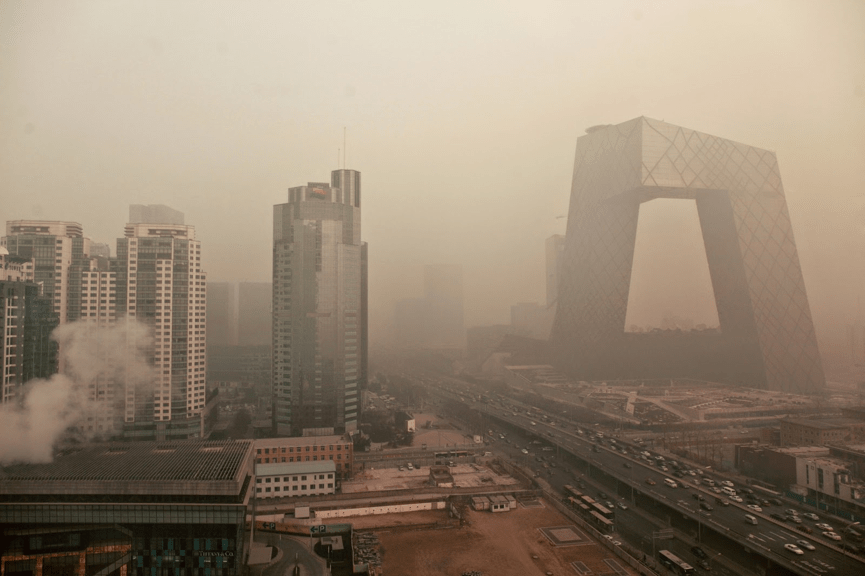
Among these 17 goals, I focused on the eleventh: sustainable cities and communities. In the early stage of urban development, we only focused on the expansion of the city, the improvement of people’s income, and built many factories that caused huge pollution to the environment. Therefore, the ecological environment of the city is deteriorating, many water resources are polluted, and the air quality is also declining, which even affects the stability of the climate, and extreme weather occurs frequently.

Figure2: Gases from factories pollute the air

Source: https://kknews.cc/zh-my/health/ggyrbym.html

In my blog, I’ve detailed how social networks can help us make up for our mistakes and focus on sustainable urban development. But when working on the subject with my team, I found that my recommendations were not comprehensive enough. I used to think that the biggest role of social networks is to advocate for people to pay attention to the sustainable development goals and protect the environment. But when we dig deeper, we find that social network analysis has more specific uses. For example, we can use pictures and words about the weather posted by people on social media to help analyze air quality in certain areas. At present, the meteorological bureau’s detection equipment is not able to transmit data in real time, and there is a certain time interval between the data. But social media data is real-time and plentiful, and some studies have shown that combining these two kinds of data can get a more accurate prediction of air quality. At the same time, data analysis of social media can help us study the regional characteristics of air quality. For example, the air quality of one region changes over time, or the air quality of multiple regions can be compared.

Figure3: Map showing haze severity in near real-time between March 8th and March 9th in 2014 at the district level

Source:https://medium.com/pulse-lab-jakarta/nowcasting-air-quality-using-social-media-f478460784f5

To sum up, I am honored to be exposed to social networks and to learn that this technology or research approach can help us build more eco-friendly cities. Also, I am grateful to my classmates for their great research on SDGS they are interested in. By reading their blogs and watching their presentations, I can learn more about SDGS and the application of social network analysis to these goals.

Social network analysis for goal 13: Sustainable Cities and Communities

Sustainable development of cities and communities includes many aspects, such as resources, environment, economy, society and so on. Social network analysis can help achieve sustainable development goals in many ways.

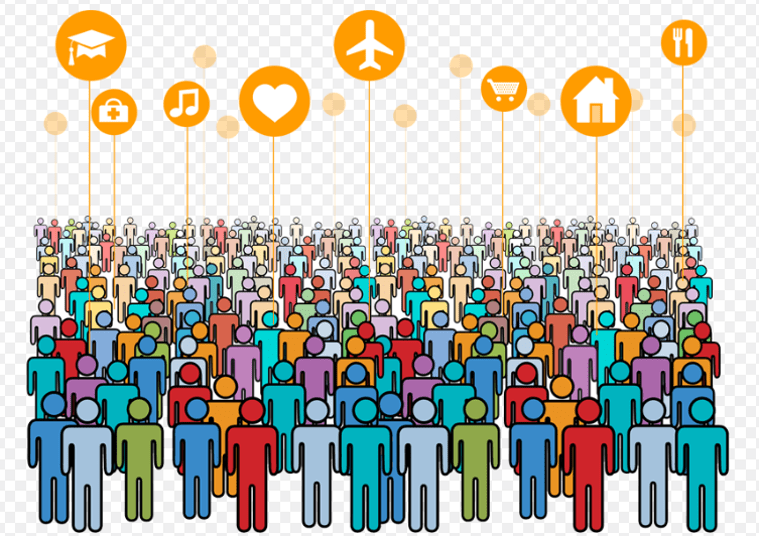
When it comes to resource allocation, for example, urban planners agonizing over where to build shopping malls, where to build schools, and where to build entertainment facilities, they can turn to social network analysis for help. Social network analysis is an important means to get people’s ideas. Urban planners can collect a large amount of user data and then use data analysis tools to get residents’ ideas about the city, so that they can know where people want to build a park. Through social network analysis, we can know how much city residents or community residents need certain resources. We all know that resources are limited, and the goal of sustainable development requires us to rationally allocate limited resources, and social network analysis can help us achieve this.

Image source: http://www.rui2.net/sucai/1375056.html

Social network analysis can also help us build sustainable urban economies. In recent years, the sharing economy is booming, more and more people start to use the sharing bike, sharing mobile power, sharing cars and so on. Social network analysis can help developers of Shared products gain a deeper understanding of product requirements, such as feature configurations, launch locations, and launch quantities. Sharing economy is an important part of market economy and its stable development plays an important role in the sustainable development of economy.

Image source: https://medium.com/the-machiavellian-eye/the-sharing-economy-a-misnomer-f0c4e701bfee

Finally, the sustainable development of society. Society is made up of people, and people need to socialize. Social network analysis plays an important role in social stability. It can monitor public opinion, In the information age, everyone can express their views on the Internet. Most people take responsibility for what they say online, but a few do not use moral restraints on what they say. They post rumors or maliciously distort facts on the Internet, and even incite many people who do not know the truth to join them. This kind of behavior will seriously endanger the stability of society and hinder the sustainable development of society. Social network analysis can analyze the comments on the network to locate the rumor distributor and solve the problem from the root.

Sustainable Cities and Communities

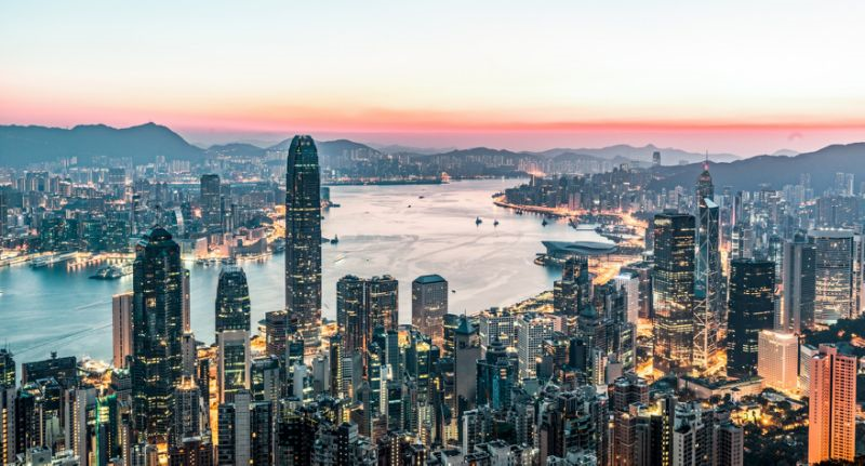
City is the symbol of human civilization and the center of people’s economic, political and social life. Urbanization is an inevitable process of human progress and an important clue in the transformation of human social structure. It marks the realization of the goal of modernization. Only after the baptism of urbanization, mankind can step into a more brilliant era. Today, more than half the world’s people live in cities. In the estimation of the United Nations, nearly 5 billion people will live in cities by 2030.

香港全球競爭力升至第3位(Getty images)

Source: https://hk.news.yahoo.com/%E9%A6%99%E6%B8%AF%E5%85%A8%E7%90%83%E7%AB%B6%E7%88%AD%E5%8A%9B%E5%8D%87%E8%87%B3%E7%AC%AC3%E4%BD%8D-%E6%96%B0%E8%81%9E%E8%87%AA%E7%94%B1%E6%8E%92%E7%AC%AC61%E4%BD%8D-025241258.html

However, it is far from enough to exclaim and praise the abundant fruits brought by urbanization. The process of urbanization is not necessarily a wonderful music. Like many progress, the process of urbanization is also mixed with many discordant sounds. Nowadays, cities account for more than 70 per cent of global carbon emissions and consume 60-80 per cent of energy. Rapid urbanization poses additional challenges, such as social inequality, traffic congestion and water pollution and related health problems.

Source: http://emmelynchua.blogspot.com/2014/06/week-10-poetics-in-extreme-contexts.html

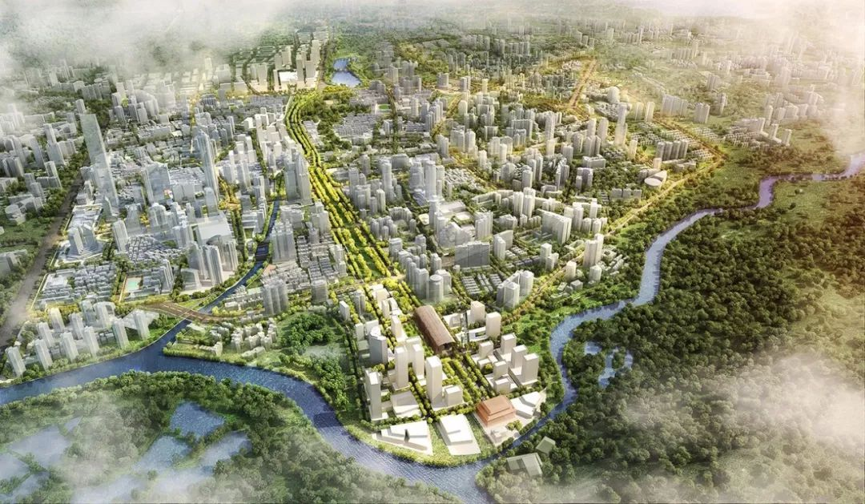
It is of great significance to correctly understand the impact of urbanization and take necessary measures to solve it. Through proper urban planning and management, urban spaces around the world can become not only inclusive, safe, resilient and sustainable, but also a dynamic hub for business and innovation.

Source: http://www.sohu.com/a/286823030_716486

Sustainable cities and communities can be divided into four different aspects:

  1. Resource: Urban sustainable development is a process in which a city continuously pursues its inherent natural potential. The aim is to build a green garden city based on survival capacity. In order to achieve sustainable development, cities must make rational use of their own resources, seek a friendly use process, and pay attention to the use efficiency, not only for the sake of the present, but also for the sake of future generations.
  2. Environment: Sustainable urban development is a process in which the public should constantly strive to improve the natural and cultural environment of their own communities and regions and contribute to global sustainable development. It is a duty and an obligation to leave these environmental problems to future generations or to a larger scale, or even to the world, and from that it means responsible cities.
  3. Economy: Urban sustainable development refers to the coordination of urban system structure and functions in the process of global sustainable development. The world health organization (WHO) proposes that sustainable urban development should evolve toward a more efficient, stable and innovative urban economy with minimal use of resources. Cities should give full play to their potential, constantly pursue high quantity and high quality socio-economic population and technological output, and maintain their own stability and consolidate their position and role in the urban system for a long time. For most cities, especially the third world cities, only by increasing the efficiency of production and the output of material products can the vitality of the city be preserved forever.
  4. Society: In social aspect, sustainable urban development should pursue a city where human exchanges, information transmission and culture have been greatly developed, marked by vitality, stability and fairness, without crimes. The social characteristics of sustainable cities include two aspects: A. sustainable cities are living cities, which should give full play to their ecological potential to serve healthy cities. They should not only consider the city as a whole, but also adapt different environments to the needs of different ages and lifestyles in the city. B. the sustainable city is participating city, all the people can actively participate in discussion of cities and urban decision-making.

Therefore, there are six basic standards for us to observe in the construction of sustainable cities and communities:

  1. Reducing water and air pollution and reducing the generation and emission of destructive gases.
  2. Reducing energy and water consumption.
  3. Encouraging the protection of biological and other natural resources.
  4. Encourage individuals to assume ecological responsibilities as consumers.
  5. Encourage industry and commerce to adopt eco-friendly technologies and develop and sell eco-friendly products.
  6. Encourage the reduction of unnecessary urban traffic and provide necessary public facilities.

Yue_yue’s Blog 1

What’s social media analysis?

I want to share my understanding of social media analysis from the following points.

First, what is social media analysis? I think it includes two main parts: one is the data source from social media, the other is data analysis technology. And the target is to solve various problems basing on analyzing social media data. Currently, social media represented by blog, Facebook, twitter and YouTube, and text mining, natural language processing technology are usually used to analysis these social media data. They transform qualitative data into quantitative data and further study its implications.

I have thought about some application scenarios of social media analysis, from which I can better understand its execution process and function.

Scenario 1: Building user modeling especially when the enterprise needs to expand its business. Companies can use social media data to dig out useful information for future business, such as characteristics of potential customers, future popular product trends and so on. If a company is going into the hospitality industry, they can collect Facebook posts about housing and travel. Then using natural language processing or other machine learning algorithms to figure out the characteristics of future customers. For example, if it is found that many young people prefer choosing to take Monday off and have a three-day holiday together with Saturday and Sunday, then the company can design a three-day housing package to attract more customers.

Source: https://socialbeta.com/t/60657

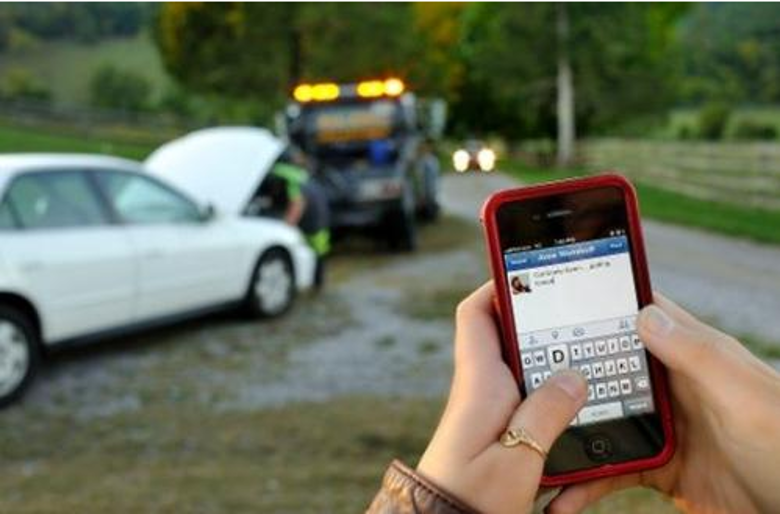
Scenario 2: Helping enterprises monitor product quality and maintain company image. It’s common that people like to release their stress on social media. More and more users release their frustrations by tweeting or updating their Facebook status. For example when they’re stuck in airports, traffic jams, car breakdowns. Companies can collect these data and analyze them to find out the image in people’s minds about their brands, so that they can improve their service better. There is a famous example, researchers at Virginia tech university’s school of business have compiled social media posts about faulty cars by Honda, Toyota, Chevrolet and others, which are then used to analyze safety and performance issues. This is the first large research project to demonstrate the usefulness of social media data for vehicle quality management. As project co-leader Abraham says, “there is a lot of valuable content on social media about vehicle quality that has never been discovered or exploited by automakers. “If auto manufacturers can use these data, I think it will be of great help for them to improve the quality of their vehicles and improve their brand image.

Source: https://socialbeta.com/t/60657

Scenario 3: Monitoring changes in public sentiment. As users of social media are highly active now, people are willing to share their emotions on social media spontaneously, so posts related to emotions can be collected to analyze the changes of public emotions and even the influencing factors. A team from the university of Bristol, for example, looked at 484m twitter messages created by more than 9.8m people in the UK between July 2009 and January 2012. Not surprisingly, the researchers found that public sentiment was highly correlated with the current economic climate, with negative mood swings associated with fiscal austerity and high social stress.

Source: https://www.iyunying.org/social/4826.html

To sum up, I think the application of social media analysis has been very rich, but there is still a great prospect for development. With the increase of social media users and the development of data analysis technology, social media analysis will definitely provide us with more help in the future.

通过 WordPress.com 设计一个这样的站点
从这里开始